High-temperature engineering plastics such as PEEK, PPS, LCP, and PEI present extreme demands on hot runner thermocouples due to their elevated processing temperatures, typically ranging from 350°C to 420°C. The first selection criterion is the thermocouple type. For sustained operation above 350°C, Type K thermocouples are commonly used, but they experience accelerated oxidation at these temperatures, leading to drift. Type N thermocouples (Nicrosil-Nisil) offer superior oxidation resistance and stability at high temperatures, making them the preferred choice for high-temperature applications. They have a lower drift rate-typically 0.5°C per 1000 hours at 400°C, compared to 1.5°C for Type K. The second criterion is the sheath material. Standard stainless steel 304 will oxidize and scale at 400°C, reducing its mechanical integrity and potentially contaminating the resin. Inconel 600 or 625, with their high nickel-chromium content, form a protective oxide layer that resists scaling and maintains strength. For ultra-high temperatures above 400°C, consider superalloys like Haynes 214 or alloy 59. The third criterion is the probe diameter. Thinner probes (0.5-1.0 mm) offer faster response, which is essential for high-temperature plastics that degrade quickly if overheated. However, thinner probes are more susceptible to oxidation-a trade-off that must be balanced. A 1.0 mm Inconel probe is a good compromise. The fourth criterion is the insulation material. High-purity, densely packed magnesium oxide (MgO) is standard, but for temperatures above 400°C, ensure the MgO is specially processed to remove moisture and to have a high density (>95% gęstości teoretycznej), aby zapobiec upływowi prądu. Piątym kryterium jest uszczelnienie zimnego końca. W wysokich temperaturach zimny koniec należy uszczelnić-odporną na wysoką temperaturę żywicą epoksydową lub uszczelką szklano--metalową, która wytrzymuje temperaturę 250 stopni w obszarze złącza. Szóstym kryterium jest kabel kompensacyjny. Izolacja kabla musi być dostosowana do temperatury otoczenia przy formie. Zalecane są kable z izolacją-z włókna szklanego z oplotem ze stali nierdzewnej, ponieważ izolacja silikonowa może ulec degradacji w temperaturze powyżej 300 stopni. Siódmym kryterium jest kalibracja. Termopary wysokotemperaturowe-należy kalibrować według rzeczywistej temperatury przetwarzania, a nie tylko w niższych punktach. Poproś o certyfikat kalibracji z punktami 350 stopni i 400 stopni. Ósmym kryterium jest okres wymiany. Biorąc pod uwagę przyspieszony dryf, wymieniaj termopary wysokotemperaturowe częściej,-zazwyczaj co 3000-5000 godzin pracy lub co roku. Dzięki starannemu doborowi termopar w oparciu o te kryteria przetwórcy-wysokotemperaturowych tworzyw konstrukcyjnych mogą osiągnąć stabilną kontrolę temperatury, zminimalizować degradację i wydłużyć żywotność czujnika, zapewniając produkcję wysokowydajnych części o stałej jakości.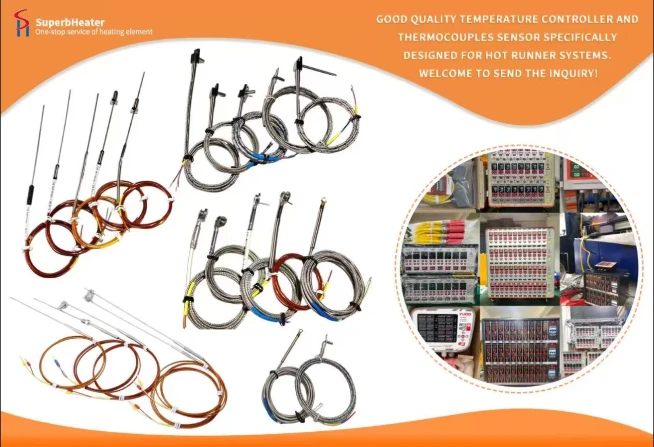

 Polski
- Polski
- English
- Français
- Deutsch
- 日本語
- Italiano
- Español
- Português
- русский
- Türkçe
- বাংলা
- O'zbek
- dansk
- Norsk
- Srbija jezik (latinica)
- Indonesia
- 한국어
- Български
- Gaeilgenah Éireann
- Eesti
- slovenčina
- magyar
- Việt Nam
- עברית
- Bai Miaowen
- Melayu
- ไทย
- Latviešu
- România limbi
- Kreyòl Ayisyen
- Nederlands
- Ελληνικά
- Cymraeg
- Malti
- íslenska
- українська
- اردو
- Lietuvių
- Català
- bosanski
- hrvatski
- عربي
- فارسی
- Čeština
- हिंदी
- Svenska
- slovenščina
- suomi


